Homeowners relaxing on an A-DIY deck kit in a Denver, CO backyard
Denver, CO

Deck Builders Near Me in Denver, CO? Build Your Own Deck With an A-DIY Kit

Build your own deck with professionally engineered, ready-to-assemble wood and composite deck kits, delivered curbside to homes in every Denver neighborhood, from Highland to Washington Park. Framing, decking, footings and hardware are included, so a drill is the only tool you need.

Contractor, Traditional DIY or Deck Kit: 3 Ways to Get a Deck in Denver

Searching “deck builders near me” or “deck contractors near me” in Denver brings up dozens of crews, and the best ones book up quickly once spring snowstorms are over. Compare the three ways to get a new deck, from hiring a deck installer to assembling a DIY deck kit, and see which fits your budget and timeline.

Hire a Denver Deck Builder
Option 01

Hire a Denver Deck Builder

A full-service deck contractor handles design, zoning and building permits, footings, framing and cleanup. It is the best fit for elevated, attached or highly custom decks. Get several written quotes and expect a wait during Denver’s busy spring and summer season.

Upfront cost
Your time & effort
Planning guesswork
Traditional DIY
Option 02

Traditional DIY

Buy lumber, hardware and decking from a local supplier, then work out the design, spans, measurements, cuts and layout yourself. It suits experienced builders with their own tools, a way to haul long boards and plenty of free weekends.

Upfront cost
Your time & effort
Planning guesswork
Finished A-DIY wood deck
I am far from a handyman but the wife wanted a deck in the backyard and I couldn’t see myself dishing out $20,000 for someone to come build it for us. I ended up seeing an ad for this company and was blown away by the price and ease of install. 2 of our neighbours ended up ordering as well!
Imran K. · Google review

Hiring a Deck Contractor in Denver? Ask These Questions

  1. 01Have you built decks in Denver recently, and can I see photos?
  2. 02Can you show current liability and workers’ comp insurance?
  3. 03Will you pull the zoning and building permits with the City?
  4. 04How deep will footings go, and how will you handle expansive soil?
  5. 05Which lumber grade, decking and fasteners are in the quote?
  6. 06Are stairs, railings, demolition and haul-away included?
  7. 07What is the payment schedule and start date?
  8. 08What workmanship warranty do you provide?
Shop Deck Kits

Which deck is right for you?

Wood or composite. Two ways to make it yours. One remarkably simple way to build it.

Every A-DIY deck includes:

Engineered for

Engineered for

15,000+ lbs

Assembles in a

Assembles in a

few hours

Grade 1 Treated &

Grade 1 Treated &

Kiln-Dried Lumber

Professional-grade

Professional-grade

structural system

5-year structural

5-year structural

warranty

Engineered for

Engineered for

15,000+ lbs

Assembles in a

Assembles in a

few hours

Grade 1 Treated &

Grade 1 Treated &

Kiln-Dried Lumber

Professional-grade

Professional-grade

structural system

5-year structural

5-year structural

warranty

Best Selling

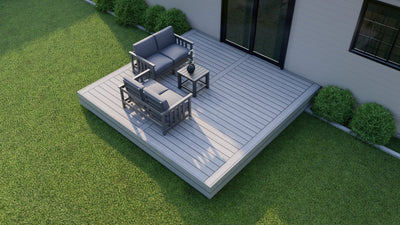
Wood Deck Kit

From$3,699.00

Grade 1 Southern Yellow Pine. Pressure Treated and Kiln Dried.

SHOP NOW →

Real wood beauty

Authentic Southern Yellow Pine with the warmth, texture, and character only real wood can offer.

Kiln-dried, pressure-treated lumber

Grade 1 lumber engineered to help reduce warping, twisting, and shrinking over time.

Finish it your way

Can be stained or sealed to match your home, your backyard, and your style.

Lower upfront investment

A more budget-friendly way to get a professional-grade deck system.

Ongoing maintenance required

Best for homeowners who don’t mind occasional sealing, staining, and upkeep.

Best for:

Homeowners who want the natural look of real wood and more flexibility at a lower starting price.

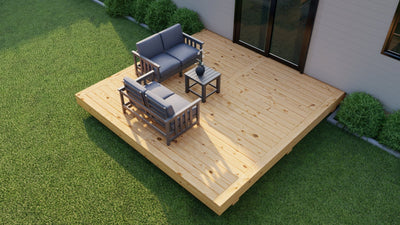
LOW MAINTENANCE

Composite Deck Kit

From$5,700.00

Engineered For Lasting Beauty.

SHOP NOW →

Premium wood-inspired finish

Rich, natural-looking colors designed to deliver the look of wood with a more refined finish.

Low-maintenance surface

No sanding, staining, or sealing required

Fade and splinter resistant

Built to stay beautiful season after season with less upkeep.

25-Year Warranty

Structural, stain & fade warranty on composite boards.

Premium long-term ownership

A higher-end option for homeowners who want less maintenance and more convenience.

Best for:

Homeowners who want the look of wood without the regular upkeep.

Planning a Deck in Denver: Climate, Snow and Weather Considerations

At 5,280 feet, Denver decks face strong sun, dry air, wide day-to-night temperature swings, spring snowstorms and summer hail. Plan for all of them before you choose decking materials and a deck foundation.

Built for Mile High backyards Built for Mile High backyards

Spring Snowstorms and Deck Load

Some of Denver’s heaviest, wettest snow falls in March and April. Applicable A-DIY configurations are engineered to hold up to 15,000 lbs when properly assembled and supported. Clear snow with a plastic shovel instead of piling it against the house.

Freeze-Thaw Cycles and Expansive Soils

Sunny days and cold nights bring frequent freeze-thaw cycles, and clay soils along the Front Range can swell when wet. Freestanding ground-level decks, like A-DIY kits that assemble 15–17 inches off the ground on Tuff Block footings, should be checked for level each spring.

Dry Air, Drainage and Airflow

Low humidity dries wood quickly, which can lead to checking. Choose a spot that drains away from the house, keep board gaps clear and leave airflow under the deck so framing dries evenly after storms.

High-Altitude UV and Hail

Thinner air lets more UV through, so wood fades and grays faster. Seal pressure-treated wood every one to two years, or choose composite decking for a surface that never needs staining, and sweep off hail and debris after summer storms.

≈49 in.

Normal seasonal snowfall at Denver’s official station (1991–2020)

≈90°F

Normal July high in Denver (1991–2020)

15,000 lbs

Engineered load rating for applicable A-DIY decks

Apr – Oct

Typical deck-building window in Denver

Homeowners enjoying a finished A-DIY deck in spring
Order in winter · build in spring

When Is the Best Time to Build a Deck in Denver?

Most Denver homeowners build between late spring and early fall, though mild, sunny spells can extend the season. Plan and order over the winter so your kit arrives once late-season snow is behind you.

  1. Nov – FebPlan & reserve

    Measure, choose size and material, check zoning and permits, and lock in today’s price.

  2. Mar – AprPrep the site

    Schedule delivery around spring storms and level the site once the ground dries out.

  3. May – JunBuild

    Mild days and long evenings suit a weekend DIY build or a local installer.

  4. Jul – OctEnjoy & protect

    Work in cooler morning hours in summer, then seal wood before the first fall freeze.

Reserve for Spring Delivery — $250

A-DIY Reserve: a non-refundable $250 deposit holds today’s price for a future delivery date you choose.

How Does A-DIY Work for Denver Homeowners?

  1. PLAN

    Choose the Size and Material

    Select an available deck size, pressure treated or composite surface and applicable options.

  2. PLAN

    Review the Property

    Confirm the available space, ground conditions, slope, proposed height, drainage and delivery access.

  3. PLAN

    Confirm Permits and Foundations

    Contact the local building department and select a suitable foundation system for the property.

  4. DELIVER

    Receive the Deck Kit

    The coordinated components are delivered to the property.

  5. BUILD

    Assemble It or Hire Local Help

    Complete the assembly yourself or hire a local handyman.

  6. BUILD

    Complete Required Inspections

    Arrange any inspections or final approvals required by the municipality.

A homeowner assembling A-DIY deck joists beside a travel trailer
WATCHHow Does A-DIY Work

What’s Included in Every A-DIY Deck Kit

Each A-DIY deck kit arrives as one coordinated system packed in a crate, so the only tool you supply is a drill. The driver bit is included.

Footings

Tuff Block footings for a stable, freestanding base.

6x6 Beams and 2x8 Joists

Heavy-duty 6x6 beams and 2x8 joists spaced 13–14 inches on center.

Decking Boards

Pre-sealed 5.5-inch pressure-treated boards or composite boards.

Hardware and Fasteners

Galvanized, corrosion-resistant screws and brackets, plus the driver bit.

Labeled, Color-Coded Parts

Every component is marked so you know where it goes.

Step-by-Step and 3D Instructions

A printed guide plus an online 3D instructional app.

Engineering Diagrams

Structural layout, beam and joist sizes and post locations for your permit questions.

Real Build Support

Deck specialists by phone and live chat from order to final board.

Exploded diagram of an A-DIY deck kit showing decking, joists, beams and footings

Make It Yours: Steps, Railings and Custom Sizes

Kits assemble 15–17 inches off the ground. Add steps, railings or a longer post kit with bracing for a raised deck, or ask about a size that isn’t listed. Our deck specialists will help you plan the right layout for your yard.

Uneven Ground, Elevated Decks and Foundation Options

An A-DIY deck may be installed over sloped or uneven ground by adjusting the supporting post heights to establish a level deck surface.

Elevated A-DIY deck with stairs and railings beside a home
A-DIY deck on adjustable posts over sloped ground
UP TO APPROX. 40inches Supported elevation

Supported Elevation

Supported configurations may be elevated to approximately 40 inches using the appropriate posts, foundations and bracing.

Depending on the height and configuration, the project may also require:

  • Longer posts
  • Additional bracing
  • Stairs
  • Railings
  • Additional engineering
  • Permit approval

Foundation and Footing Options

Depending on the property, configuration and local approval, suitable systems may include:

  • Sonotubes
  • Helical piles
  • Ground screws
  • In-ground posts
  • Approved surface footing systems
  • Other site-specific foundations

Denver Deck Permits and Building Code Information

In Denver, whether a deck needs a permit depends mainly on how high it sits above the ground and whether it is covered. Community Planning and Development handles both zoning and building permits for the City and County of Denver. Use the quick check, then confirm the rules for your address.

Rule of thumb: in Denver, uncovered decks 12 inches or more off the ground need a zoning permit, and covered decks or decks 30 inches or more off the ground need a building permit too.

Permit quick check

General guidance for Denver-area decks

Is the deck attached to your house?
Yes
A permit is usually required
No
Is it more than 30 in. above grade?
Yes
Permit usually required
No
Often exempt*

*In Denver, uncovered decks under 30 in. off the ground generally don’t need a building permit, but those 12 in. or higher still need a zoning permit, and covered decks need both. A-DIY kits sit 15–17 in. high. Neighboring cities set their own rules.

Deck Permits & Building Codes in Denver, CO

Inside DenverCity and County of Denver

Inside Denver

Zoning and building permits come from Denver Community Planning and Development, which enforces the 2025 Denver Building and Fire Code, based on the 2024 International Codes. Deck plans show setbacks, height and footing size and depth.

Neighboring Cities and CountiesDenver Metro

Neighboring Cities and Counties

Aurora, Lakewood, Englewood, Wheat Ridge, Glendale and other metro cities run their own building departments, and some homes with a Denver mailing address sit in unincorporated Adams, Arapahoe or Jefferson County. Check which government covers your lot.

Local Codes, Not a State CodeColorado

Local Codes, Not a State Code

Colorado has no statewide residential building code. Each city and county adopts its own edition of the International Residential Code with local amendments, so deck rules can change from one municipality to the next.

How to Get a Deck Permit in Denver

  1. Step 1Check zoning and setbacks

    Confirm how close the deck can sit to property lines and the house under the Denver Zoning Code.

  2. Step 2Prepare a site plan and drawings

    Show the deck’s location, size, height, setbacks and footing details. A-DIY engineering diagrams can help.

  3. Step 3Submit your application

    Apply to Denver Community Planning and Development for the zoning permit and any building permit.

  4. Step 4Schedule inspections

    Book any inspections your permit requires, then enjoy the deck.

Questions to Ask Your Building Department

  • Does my deck need a permit?
  • What setbacks apply to my lot?
  • Is a site plan or survey required?
  • How deep must the footings be?
  • Are stamped plans required?
  • Which inspections are required?
  • Are guards required at this height?
  • Can the homeowner do the work?
Not sure what your lot allows?

Our deck specialists can help you plan size, height and placement before you apply.

  • Dimensions
  • 2x8 joists
  • Beams
  • Post locations

Can A-DIY Diagrams Help With My Permit?

Yes. Engineering diagrams for applicable A-DIY configurations show dimensions, structural layout, beam and joist sizes and post locations to support your application. Your department may still ask for a survey, site plan or stamped documents.

Requirements change and can differ between neighboring municipalities. Always confirm current rules with your local building department before you build.

Deck Kit Delivery Across Denver and the Denver Metro Area

A-DIY ships deck kits by LTL freight to homes throughout the City and County of Denver and the surrounding Denver Metro Area. The carrier calls ahead to schedule curbside delivery, typically within 10–14 business days.

Denver Deck FAQs

Are there deck builders near me in Denver, CO, or can I build a deck myself?

You can do either. Denver has plenty of deck contractors, but their spring and early-summer calendars fill quickly, so get two or three written quotes and ask for proof of insurance and recent Denver projects. If you would rather build your own deck, A-DIY delivers professionally engineered wood and composite deck kits to Denver homes, and you or a local handyman can assemble one with just a drill.

How much does it cost to build a deck in Denver, and is DIY cheaper?

It depends on size, material, height, footings, permits and local labor. A-DIY deck kits range from $3,699 for a 6x12 pressure-treated kit to $12,799 for a 16x28 composite kit. Because labor is a large share of a contractor’s price, building it yourself is usually the cheaper route, and homeowners typically spend 30–50% less than hiring a contractor. Kit prices don’t include permits, site prep or hired help.

How much does a 12x12, 12x16 or 16x20 deck cost?

With A-DIY, a 12x12 deck kit is $4,899 in pressure-treated wood or $5,700 in composite. A 12x16 composite kit is $6,600; the closest wood size is 12x18 at $5,969. A 16x20 kit is $7,600 in wood or $10,199 in composite. Framing, decking, footings and hardware are included.

Do I need a permit to build a deck in Denver?

Often, yes. In the City and County of Denver, Community Planning and Development requires a zoning permit for uncovered decks 12 inches or more off the ground, plus a building permit once a deck is 30 inches or more off the ground. Covered decks need both. Homes in neighboring cities such as Lakewood, Englewood or Aurora apply to their own city, so confirm which office covers your address.

What size deck can I build without a permit in Denver?

Denver’s deck guidance is based on height rather than square footage. An uncovered deck from 12 up to 30 inches off the ground needs a zoning permit but generally not a building permit. A-DIY kits assemble 15–17 inches off the ground, so plan on a Denver zoning permit to confirm setbacks, and check with Community Planning and Development before you build.

Can I put a hot tub on an A-DIY deck?

Many customers use their A-DIY decks for hot tubs and saunas. Applicable configurations are engineered to hold up to 15,000 lbs when properly assembled and supported, but tub weight, placement and wiring vary, so talk to a deck specialist before you order and check local electrical and permit rules.

How deep do deck footings need to be in Denver, and can I build a floating deck?

Denver’s code amendments generally call for footings at least 36 inches deep to get below the frost line, and deck plans must show footing size and depth. Freestanding ground-level decks are treated differently from attached decks, and A-DIY kits sit on included Tuff Block footings. Acceptance of a floating design is up to the building official, and expansive clay soils are common along the Front Range, so ask Community Planning and Development first.

How does Denver’s weather affect a deck?

At a mile high, Denver decks get intense UV, dry air and big day-to-night temperature swings, along with spring snowstorms, freeze-thaw cycles and summer hail. Seal pressure-treated wood every one to two years or choose composite to limit fading and checking. Applicable A-DIY configurations are engineered for up to 15,000 lbs when properly assembled and supported, but clear heavy snow with a plastic shovel.

When is the best time to build a deck in Denver?

Late spring through early fall, watching for late snowstorms in April and the hottest afternoons in July. Many homeowners plan and order over the winter so the kit arrives once the yard dries out. A-DIY Reserve holds today’s price for a future delivery date with a $250 non-refundable deposit.

What deck kit sizes does A-DIY offer?

Pressure-treated wood kits come in 15 sizes: Standard 12x12, 12x18, 12x20, 12x24, 12x28, 16x16, 16x20, 16x24 and 16x28, plus Compact 6x12, 6x16, 6x20, 8x12, 8x16 and 8x20. Composite kits come in 9 sizes from 12x12 to 16x28 in Amazon Gray or Forest Wood. Custom sizes are available on request.

How is a deck kit delivered to Denver and nearby communities?

Kits ship by LTL ground freight to Denver, Aurora, Lakewood, Englewood, Wheat Ridge, Edgewater, Glendale, Commerce City and the rest of the Denver Metro Area, typically within 10–14 business days. The carrier calls to schedule curbside delivery, and you can follow each stage in your A-DIY Hub.

How can I pay for a deck in Denver?

Pay in full, hold today’s price with a $250 non-refundable A-DIY Reserve deposit, use 0% split payments for up to eight months, or choose build now, pay later financing through Affirm, Klarna or Shop Pay, subject to approval.

Ready to Build Your Own Deck in Denver?

Choose from 15 pressure-treated and 9 composite deck kit sizes, talk to a deck specialist about your yard and get a professionally engineered deck kit delivered anywhere in Denver and the Denver Metro Area.

Engineered system

Coordinated, labeled components with engineering diagrams.

Delivered to Denver

Typically within 10–14 business days.

Real deck specialists

Phone and live chat support from planning to the final board.

Explore Deck Kits

Prefer to talk? Call our deck specialists at 1 (786) 358-2872