


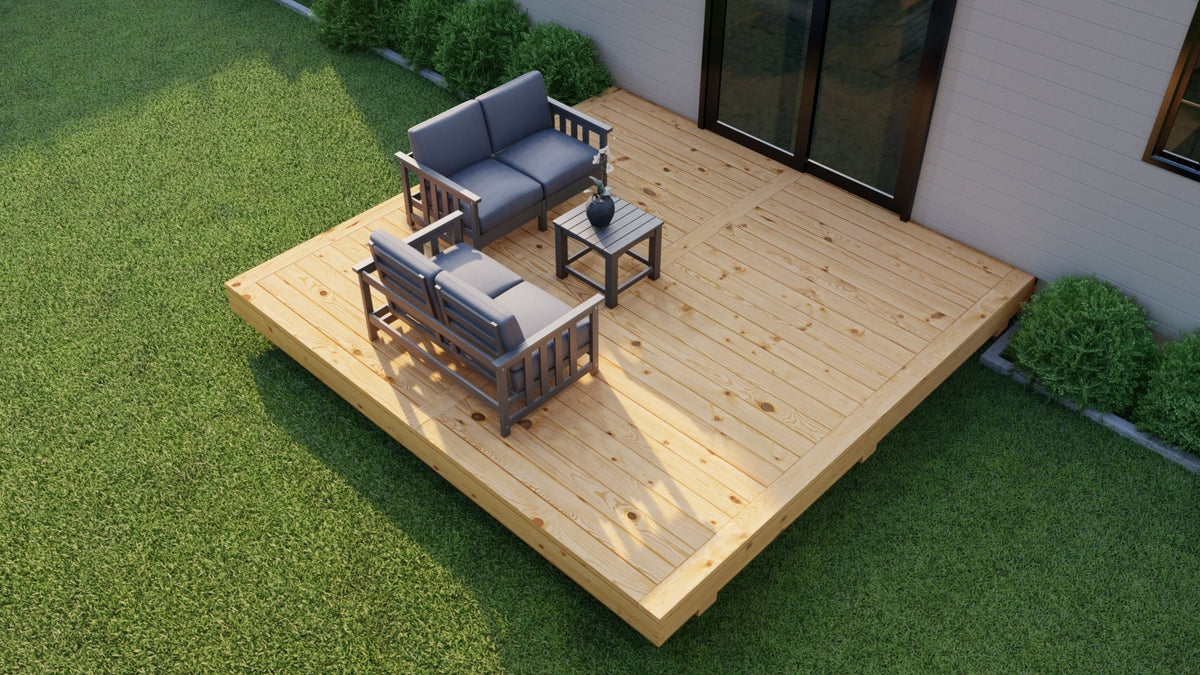
12×12 Pressure-Treated Deck
From $4,899.00
144 sq ft. Grade 1 Southern Yellow Pine, pressure-treated and kiln-dried.
- Beams6×6
- Joists2×6, 13–14 in. on center
- BoardsPre-sealed, 5.5 in. wide
Looks like your cart is empty! Feel free to browse our selection and add some items you love.

Use code FALL1500 to get $1,500 off
Get it delivered by November 6–10
BUILD NOW, PAY LATER

A clean, modern finish with lasting durability and minimal maintenance.
Shop Now →




Whether you are collecting quotes from deck builders on Long Island, pricing lumber in Rochester or reading permit rules for a Westchester backyard, there are three realistic ways to build a deck in New York. You can hire a contractor to handle everything, build from raw materials yourself, or start with a professionally engineered deck system such as A-DIY and assemble it yourself or with local help. This guide compares all three and explains what drives cost, how permits and contractor licensing work in New York, and which materials hold up best here.
Most New York homeowners end up choosing between the same three paths. The right one depends on how custom the design is, how much of the work you want to take on, and how much certainty you want about materials and price before the project starts.
A deck builder designs the deck for your property, sources materials, handles construction and usually coordinates permits and inspections. It is the most hands-off route and the most flexible for unusual designs, and labor makes up a large share of the price.
You plan the layout, work out a cut list, buy lumber and hardware, then measure, cut and assemble every piece. This can keep material costs down if you have the skills and tools, but the structural layout, span choices and every connection are your responsibility.
A-DIY supplies a pre-engineered deck system. The lumber arrives cut to size, with the hardware and structural layout worked out in advance, so you assemble a finished deck instead of designing one from scratch. You can build it yourself or hire local help.
A contractor and an engineered deck system solve different problems. This table shows where each one fits.
| Factor | Full-service deck contractor | A-DIY deck system |
|---|---|---|
| Design | Custom to your property, including shapes, levels and house attachment | Standard sizes with a structural layout worked out in advance |
| Materials | Chosen and sourced by the contractor; grade and brand depend on the quote | Grade 1 Southern Yellow Pine, pressure-treated and kiln-dried, or composite decking, shipped together with galvanized hardware |
| Labor | The contractor's crew | You, or a handyman or carpenter you hire locally |
| Cutting and measuring | Done on site during construction | Lumber arrives cut to size; no cutting or measuring for the standard layout |
| Permits | Often handled by the contractor; confirm in the contract | You or your installer apply; engineering diagrams are available to support the application |
| Foundations | Designed and installed for your site and local frost depth | Includes deck blocks; your building department decides whether other footings are required |
| Customization | High | Within available sizes, materials and post-height options |
| Pricing | Quoted per project; depends heavily on labor and site conditions | System price listed up front; site work, footings, permits and any hired labor are separate |
| Engineering | Depends on the contractor; stamped plans may be required locally | Pre-engineered system; joists spaced 13 to 14 inches on center |
| Warranty | Contractor workmanship warranty plus manufacturer warranties | 5-year structural warranty on pressure-treated framing; composite boards carry the Deckorators manufacturer warranty |
| Best use | Complex, multi-level, rooftop or fully managed projects | Standard rectangular decks where you want a known system price and a straightforward build |
A-DIY is not a New York contractor, installer, contractor directory or permit authority, and it has no local crews or offices in New York. A-DIY supplies the deck system.
Current A-DIY deck options. Prices update automatically from the store.
From $4,899.00
144 sq ft. Grade 1 Southern Yellow Pine, pressure-treated and kiln-dried.
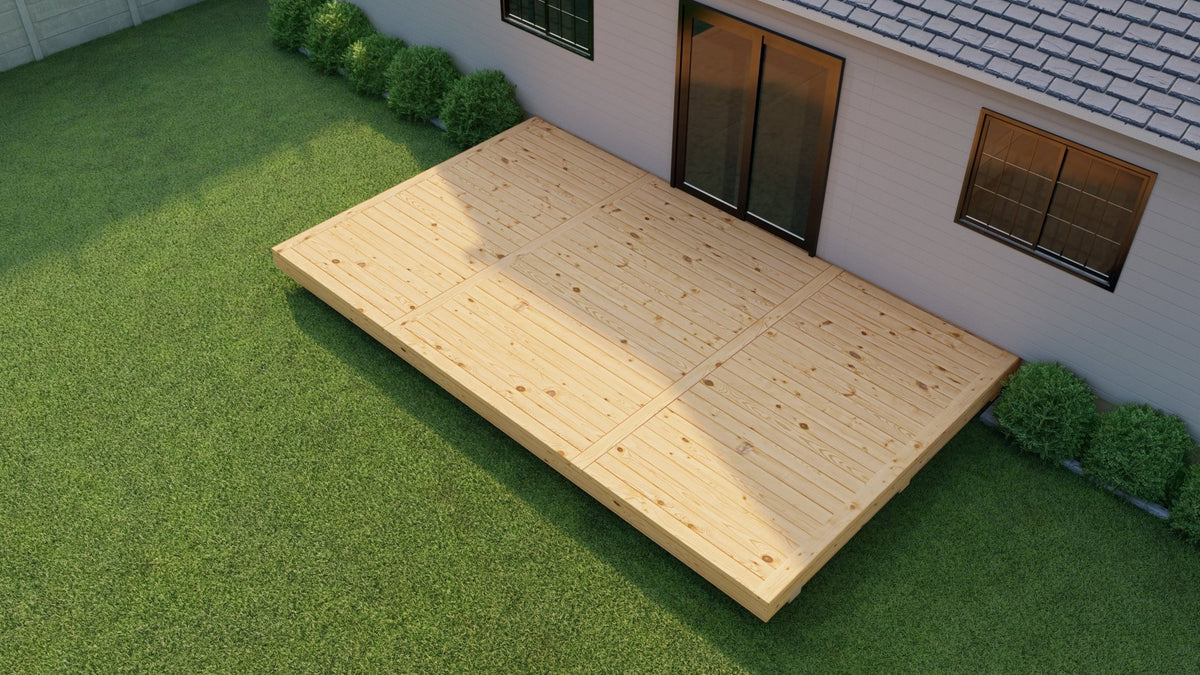
[ADD VERIFIED 12×16 PRESSURE-TREATED PRICE AND AVAILABILITY HERE]
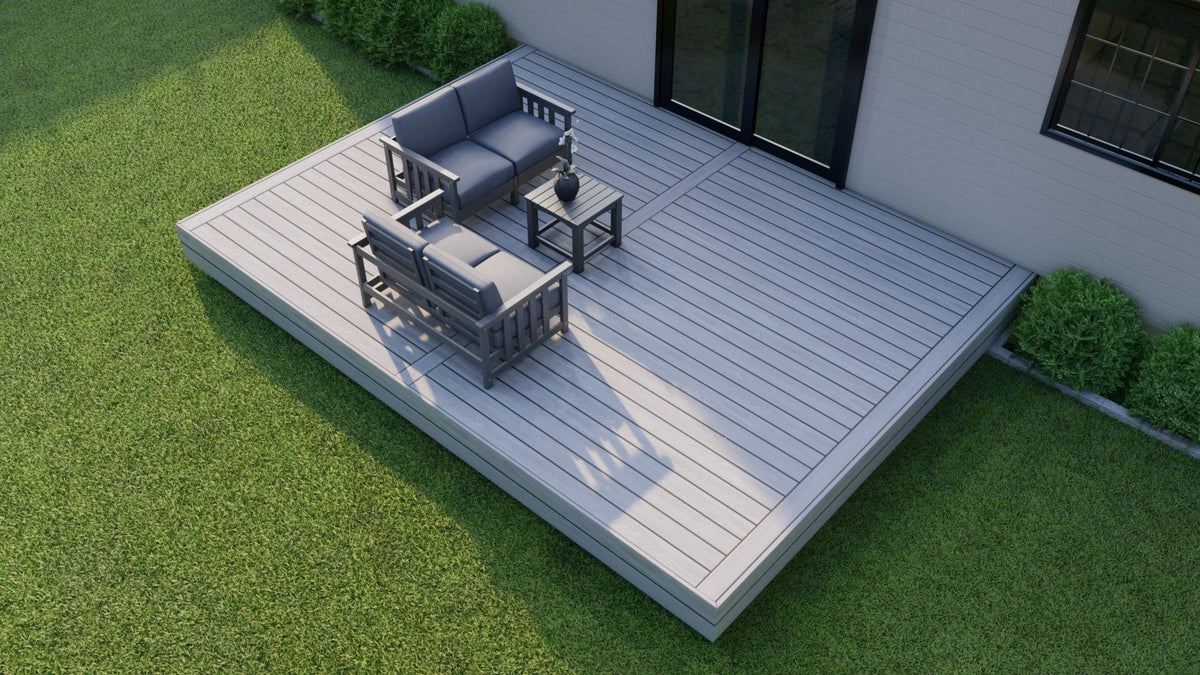
192 sq ft. Grade 1 Southern Yellow Pine, pressure-treated and kiln-dried.
From $6,600.00
192 sq ft. Deckorators composite decking in Amazon Gray or Forest Wood.
Pressure-treated: 6×12, 6×16, 6×20, 8×12, 8×16, 8×20, 12×12, 12×18, 12×20, 12×24, 12×28, 16×16, 16×20, 16×24, 16×28
Composite: 12×12, 12×16, 12×20, 12×24, 12×28, 16×16, 16×20, 16×24, 16×28
There is no single statewide price for a deck in New York. The same deck can cost very differently in Nassau County than near Syracuse, because labor rates, permit fees, design requirements and site conditions change from one municipality to the next. The most reliable number is a set of written quotes for your own property, built on the same scope.
The 2025 Cost vs. Value report publishes national average job costs for a contractor-built deck addition. New York costs may be higher or lower.
For an A-DIY build, start with the system price on the store, then add delivery, site preparation, any footings your building department requires, permit fees and any labor you hire. [ADD VERIFIED NEW YORK ASSEMBLY-LABOR COST DATA HERE]
A good deck builder is easier to identify when you compare quotes on the same written scope. Before you call anyone, write one page that describes the deck: approximate size, material, height, whether it is attached or freestanding, stairs and railings, removal of an old deck, site conditions, and who will apply for the permit.
New York does not issue a statewide home-improvement contractor license. According to the New York Attorney General, contractors must be licensed in New York City, Nassau, Suffolk, Westchester, Putnam and Rockland counties, and the City of Buffalo. Yonkers also issues its own home improvement license.
In New York City, the Department of Consumer and Worker Protection (DCWP) licenses home improvement contractors. Look up the license number before you sign.
Ask for current liability and workers' compensation certificates issued by the insurer. Since 2022, New York home improvement contracts must also include an insurance disclosure. Keep progress payments tied to completed work rather than dates, and get every change order in writing before extra work begins.
Ask what workmanship warranty the contractor offers. It is separate from manufacturer warranties on lumber, decking and hardware.
If you live in NYC, Nassau, Suffolk, Westchester, Putnam, Rockland or Buffalo, ask for the local license number and look it up.
Put it in the contract. If the contractor files, the permit should name them.
It should match your building department's frost depth and soil requirements.
State law requires escrow or a bond. The contractor must tell you where the money is held.
Most new decks in New York need a building permit. Who issues it, and which code applies, depends on whether you live inside or outside New York City.
The Department of State maintains the Uniform Fire Prevention and Building Code. The 2025 edition took effect on December 31, 2025, and its residential code is based on the 2024 International Residential Code with New York modifications.
Cities, towns and villages enforce the code and issue building permits. If a municipality has opted out, the county enforces it, and if the county has also opted out, the Department of State does. That is why fees, submittal requirements and inspection scheduling differ from one town to the next.
The five boroughs are not covered by the Uniform Code. They follow the 2022 NYC Construction Codes, and the NYC Department of Buildings (DOB) issues deck permits. DOB requires deck and porch plans to be designed by a New York State licensed Professional Engineer or Registered Architect, who files the application. Construction can start only after DOB approves the plans and issues permits, and any electrical work must be done by an NYC-licensed electrician.
Your building department fills in the local climatic and geographic design criteria table (Table R301.2), including the minimum footing depth for frost. Ground snow load comes from the state snow load map and increases with elevation above 1,000 feet. Ask your building department for its current values before you choose footings.
A-DIY provides engineering diagrams to support a permit application. They document the deck system itself: its dimensions and structural layout, including 6×6 beams and 2×6 joists spaced 13 to 14 inches on center. [ADD VERIFIED LIST OF WHAT THE DIAGRAMS INCLUDE HERE]
Your building department may still ask for property-specific items that a deck system cannot supply, such as a survey or site plan, setbacks, footing details, stair and guard details, or stamped drawings. In NYC, a licensed engineer or architect must prepare and file the plans.
Your local building department has final authority over permits. A-DIY engineering information may support an application, but it does not guarantee permit approval.
New York is hard on decks. Lake-effect snow off Lake Erie and Lake Ontario buries decks around Buffalo, Rochester and Syracuse. Long freeze-and-thaw seasons upstate push moisture in and out of the wood. Summers are humid across the state, and decks on Long Island and along the coast see salt air. Both materials work here. The difference is how much upkeep you want and what you want to spend up front.
Choose it when you want a lower starting price and real wood grain, and you are fine with routine cleaning and a fresh stain or sealer every few seasons. After a snowy winter, check for surface checking and re-seal exposed end grain.
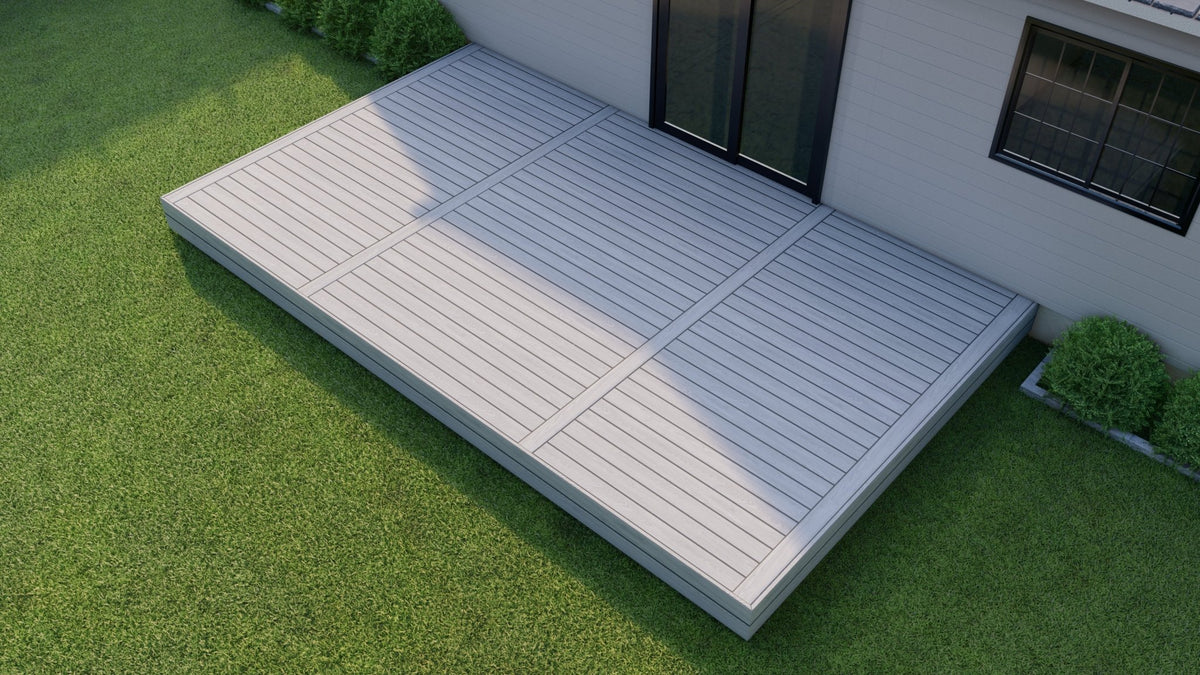
Choose it when you want a consistent surface with no staining or sealing, and you can accept a higher upfront price. It is a common choice for decks that see heavy snow or coastal air, though darker boards can get warm in direct summer sun.
| Factor | Pressure-treated wood | Composite |
|---|---|---|
| Upfront cost | Generally lower | Generally higher |
| Look | Natural grain and color variation | Uniform manufactured finish |
| Maintenance | Periodic cleaning, staining or sealing | Periodic cleaning; no staining or sealing |
| Freeze–thaw and snow | Can check, split or cup as moisture cycles | Designed to resist moisture-related cracking and splintering |
| Summer sun | Depends on stain color and exposure | Darker colors can get warmer underfoot |
| Color changes | Can be restained a new color | Set by the board color you choose |
| Repairs | Boards can be sanded, refinished or replaced | Boards can be replaced; refinishing is limited |
| A-DIY warranty | 5-year structural warranty | Boards covered by the Deckorators manufacturer warranty; framing covered by A-DIY terms |
Few New York backyards are perfectly flat. Before choosing a deck, look at how water moves across the yard, what the soil is like, and how high the finished deck needs to sit.
Drainage and soil. Keep water moving away from the house and out from under the deck. Soft or wet soil, fill and rock ledge all change what kind of support will work.
Height, stairs and guards. As a deck gets higher, it needs longer posts, bracing, stairs and, above a certain height, guards. Residential codes generally require guards on walking surfaces more than 30 inches above grade; confirm the exact rule with your building department.
Foundations. Depending on the property, the deck and local approval, support options can include surface deck blocks, concrete footings poured in tube forms, helical piles or ground screws. Much of New York has deep frost, and many building departments require footings that extend below the local frost line. Some allow exceptions for small, low, freestanding decks. Ask before you buy.
The right foundation depends on your property, the deck configuration and local approval. A-DIY does not approve foundations for a specific site; your building department does.
A-DIY is a pre-engineered deck system: the structural layout is worked out before the lumber is cut, so every deck of a given size goes together the same way.
Pressure-treated kits use Grade 1 Southern Yellow Pine that is pressure-treated and kiln-dried, with 6×6 beams, 2×6 joists spaced 13 to 14 inches on center, pre-sealed 5.5-inch deck boards and galvanized screws and hardware.
[ADD FINAL ENGINEERING-APPROVED STRUCTURAL-RATING STATEMENT HERE]
Real-world performance depends on correct assembly, the configuration, suitable foundations, site conditions, post height and bracing.
A-DIY warrants beams, joists, rim joists, blocking, posts, stair framing and structural fascia against manufacturing defects that cause a material loss of structural integrity under normal residential use, for five years from the original purchase. Composite boards are covered by the Deckorators manufacturer warranty. Exclusions include improper installation, improper footings, poor site conditions and normal wear.
[ADD VERIFIED NEW YORK CUSTOMER PROJECT HERE]
Region, deck size, material, ground conditions, foundation, who assembled it and permit details will appear here once confirmed with the customer.
Permits and contractor licensing in New York change with the municipality, so where you live matters as much as what you build. A-DIY ships deck systems to homes across New York State; it has no local offices or crews here.
NYC Construction Codes, DOB permits, plans by a licensed engineer or architect, and DCWP-licensed home improvement contractors.
Both counties license home improvement contractors. Salt air near the coast is a factor when choosing materials.
County licensing applies in Westchester, Rockland and Putnam, and Yonkers issues its own license.
Permits come from your city, town or village building department under the Uniform Code.
Heavy snow and deep frost make footing depth and snow load key questions for your building department.
Buffalo licenses home improvement contractors. Lake-effect snow is a major design consideration across the region.
Anywhere in New York State, A-DIY can deliver a deck system to your address.
Usually, yes. Outside New York City, your city, town or village issues permits under the 2025 Uniform Code. In the five boroughs, the NYC Department of Buildings issues permits under the NYC Construction Codes. Check with your building department before ordering materials.
It depends on size, material, height, footings, site conditions, permits and labor. National 2025 Cost vs. Value averages for a contractor-built deck addition were $18,263 for wood and $25,096 for composite. A-DIY system prices are listed on the store, with site work, permits and any hired labor separate.
There is no statewide license. Home improvement contractors must be licensed locally in New York City, Nassau, Suffolk, Westchester, Putnam and Rockland counties, and the City of Buffalo. Yonkers also issues its own license.
For work over $500, state law requires a written contract with start and completion dates, the work and materials, the payment schedule and a notice of your right to cancel until midnight of the third business day after signing. Deposits must be escrowed or bonded.
Neither is best everywhere. Pressure-treated wood costs less up front but needs periodic sealing through snow and freeze–thaw seasons. Composite costs more but skips staining and sealing.
Yes. Posts can be trimmed to level the deck, and longer post kits with bracing are available. Drainage, soil and your building department's footing requirements still decide what is appropriate.
The kit includes deck blocks. Many New York building departments require footings below the frost line for decks, so ask what yours requires before you build.
A-DIY provides engineering diagrams to support a permit application. They do not guarantee approval, and your building department may ask for site-specific drawings. In NYC, a licensed engineer or architect must file the plans.
Pressure-treated framing carries a 5-year structural warranty against manufacturing defects. Composite boards are covered by the Deckorators manufacturer warranty.
Yes. A-DIY ships throughout the continental United States, including all of New York State. The product page lists delivery by LTL ground freight, typically within 10 to 14 business days.
No. A-DIY supplies professionally engineered, ready-to-assemble deck systems. It does not install decks, pull permits or have local crews. You can assemble the system yourself or hire local help.

Between hiring a full-service contractor and building everything from raw lumber, there is a third option. A-DIY delivers a pre-engineered deck system that you can assemble yourself or with local help.
Last reviewed: September 25, 2026
This page provides general educational information, not legal or engineering advice. Permit, zoning, setback, foundation, structural, contractor-licensing and inspection requirements vary by jurisdiction. A-DIY is not a local contractor or installation provider and does not guarantee permit approval. Product sizes, materials, supported heights, foundation compatibility, pricing, delivery and warranty are subject to the applicable specifications and terms. Confirm your project requirements with your local building department and qualified professionals.