






DIY Outdoor Platform Deck: A Complete Guide for Homeowners
Share
What Is an Outdoor Platform Deck?
An outdoor platform deck, sometimes called a floating deck, freestanding deck, or ground-level deck, is a low-profile, independent deck structure that sits close to the ground without being attached to your home. It rests on deck blocks or surface footings rather than on deep frost depth or a ledger board connected to the house.
Because a platform deck is freestanding and typically sits just 15–24 inches off the ground, it's simpler to build, often doesn't require a permit (check your local municipality), and can be placed almost anywhere in your yard.
The classic platform deck is rectangular, clean-lined, and designed to be functional.
Platform deck vs. attached deck
An attached deck is bolted to your home via a ledger board and often requires frost footings below the freeze line. A platform (freestanding) deck is self-supporting and sits on surface footings or deck blocks. It is simpler and faster to build a platform deck and is often permit-exempt under a certain height threshold.
The Anatomy of an Outdoor Platform Deck
Understanding the structural elements helps you evaluate quality when comparing DIY deck kits, contractors, or scratch-build materials:
|
Component |
Role |
A-DIY Spec |
|---|---|---|
|
Footings / Deck Blocks |
Transfer the deck's weight to the concrete footing or ground. |
Pre-cast deck blocks are included in every kit. |
|
Beams |
Primary horizontal support members. |
Kiln-dried 6×6 pressure-treated beams. |
|
Joists |
Secondary framing between beams. |
2×8 joists, 14" on center for superior rigidity. |
|
Decking Boards |
The walking surface. |
KDAT pressure-treated or composite boards. |
|
Hardware |
Fasteners, joist hangers, deck screws. |
All hardware is included in the kit. |
Why DIY Outdoor Platform Decks Are Having a Moment
Walk into almost any backyard renovation conversation, and outdoor platform decks are the center point. It's because 77% of U.S. homeowners say they wish they spent more time outside, and nearly 60% plan to invest in their outdoor living spaces.
Outdoor living has graduated from a seasonal trend to a year-round priority. Homeowners increasingly see their backyard as livable square footage. A platform deck is the single most efficient way to activate that space. It creates a defined, finished surface where gathering doesn't feel like standing in the grass.
The timing is also shaped by economics. After years of elevated contractor costs and unpredictable material prices, homeowners are gravitating toward solutions that give them quality and control.
A pre-engineered outdoor platform deck kit from A-DIY delivers contractor-grade results at a fraction of contractor pricing, with zero waiting for scheduling windows.
Floating Decks vs. Poured Patios
Floating decks and concrete or paver patios are both excellent outdoor living investments, but they serve somewhat different purposes.
|
Factor |
Outdoor Platform Deck |
Poured/Paver Patio |
|---|---|---|
|
Installation complexity |
Moderate (or very low with a pre-cut kit). |
Moderate to high. |
|
Warmth underfoot |
✓ Natural wood/composite warmth. |
Can be cold and hard. |
|
Works on slopes |
✓ More adaptable with center post adjustment. |
Requires significant grading. |
|
Aesthetic flexibility |
High. Material, color, and finish choices. |
High. Pattern and color choices. |
|
Maintenance |
Low (composite) to moderate (wood). |
Low. Occasional washing/sealing. |
|
Resale appeal |
Very high. |
High. |
For most backyard oases, an outdoor platform deck wins on warmth, comfort, adaptability to terrain, and the appeal factor that actually gets people outside more.
Pressure-Treated vs. Composite: Which Material Is Right for Building a Deck?
This is the most common question we get at A-DIY, and the answer genuinely depends on your priorities. Both materials make excellent outdoor platform decks, but they serve different homeowners.
Pressure-Treated Wood Platform Deck
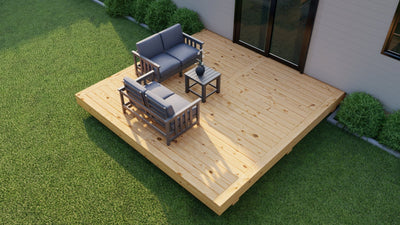
Pressure-treated lumber has been the backbone of American decking for decades. Modern kiln-dried after treatment (KDAT) lumber takes it further. By kiln-drying after the preservative treatment, the wood is dramatically more stable and far less likely to warp, cup, twist, or crack as it seasons.
Who is it best for?
- Homeowners who love the look and feel of natural wood.
- Those prioritizing the lowest entry price point.
- Classic residential aesthetics and traditional architecture.
- Builders who enjoy occasional refinishing and staining as part of home maintenance.
A-DIY KDAT Spec
Every A-DIY pressure-treated deck kit uses kiln-dried after-treatment lumber. It is a higher standard than conventional pressure-treated wood. The result is a more dimensionally stable deck board that performs better through seasonal moisture swings.
Composite Platform Deck
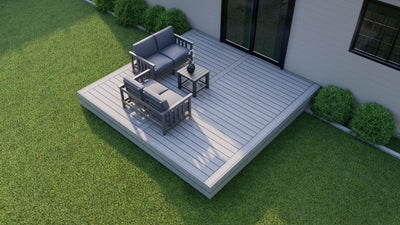
Composite decking is manufactured from reclaimed wood fiber and recycled plastics. The result is a board that looks and feels like wood. It resists moisture, UV fade, mold, insects, and splinters and requires zero staining, sealing, or sanding.
Composite has become the dominant choice for homeowners building outdoor platform decks. A-DIY's composite deck kit carries a 25-year warranty to give you true peace of mind for the life of the deck.
Who is it best for?
- Homeowners who want a beautiful deck without an annual maintenance routine.
- Families with kids and pets (splinter-free, no chemical stains).
- Hot climates where UV fade is a real concern.
- Decks in high-moisture environments or near pools.
- Anyone building a deck plans to own for decades.
How to Size Your Backyard Platform Deck
|
Use Case |
Recommended Minimum Size |
Comfortable Size |
|---|---|---|
|
2-person seating / coffee table |
8×8 ft (64 sq ft) |
10×10 ft |
|
Dining table (4–6 people) |
10×12 ft (120 sq ft) |
12×14 ft |
|
Outdoor sofa + coffee table |
10×10 ft |
12×16 ft |
|
Entertaining deck (8–12 people) |
12×16 ft (192 sq ft) |
14×20 ft |
|
Hot tub surround (ground level) |
12×12 ft around tub |
16×16 ft |
Send us photos and measurements of your outdoor space and our senior deck design consultants will recommend the optimal deck size for your yard. Book your free consultation.
What Does an Outdoor Platform Deck Build Cost?
Cost is the most searched question about outdoor platform decks and it varies enormously based on size, material, and how you build it. There are three ways you can build your new deck, and each one costs differently.
Route 1: Hire a Contractor
Professional deck installation typically runs $15–$35 per square foot for a standard pressure-treated wood platform deck, and $25–$55 per square foot for composite.
That means a 12×16 ft wood deck (192 sq ft) could cost anywhere from $2,900 to $10,560 before any change orders or unexpected site conditions. And that's before waiting 4–8 weeks for a scheduling window.
Route 2: Build from Scratch (Tools and Materials)
The raw materials for a DIY platform deck will cost less than a contractor on labor, but don't underestimate what the old-school approach demands. It requires a miter saw, post-hole digger, concrete, levels, and typically a full weekend of heavy work.
You'll also need to source every board, calculate quantities, make multiple lumber yard trips, and troubleshoot any cutting errors. Experienced builders get great results, but it's not a casual weekend project for most people.
Route 3: A-DIY Pre-Engineered Platform Deck Kit
This is where the math gets interesting. A-DIY's pre-engineered outdoor platform deck kits are priced up to 40% less than hiring a contractor and deliver a professional-grade result that the old-school scratch-build can't match in speed or structural consistency.
The kit arrives pre-engineered with all the hardware included. The assembly requires a single cordless drill. Multiple customers report saving over $5,000 compared to contractor quotes they received. And with $0 down, 0% interest financing for up to 24 months, you can have your deck this weekend.
8 Inspired Ways to Use an Outdoor Platform Deck
One of the things we love most about platform decks is how versatile they are. They're not just "the thing you put behind the house." Here is how our customers use their platform deck.
Backyard BBQ and Entertaining Hub.
It is classic and still the most popular use of outdoor platform deck among our customers. A platform deck creates a finished, elevated surface for your grill, dining table, and guests.
Outdoor Lounge and Relaxation Space.
A low-profile platform deck in a quiet corner of the yard becomes the most used spot, according to our customers. They pair it with an outdoor sectional, string lines, and a fire pit.
Morning Yoga and Fitness Deck.
A flat, stable, wood or composite surface is ideal for yoga, stretching, or outdoor workouts. The natural material feels underfoot in a way that a concrete patio simply doesn't.
Garden Feature Platform.
Place a platform deck in the middle of a garden space as an architectural element. It becomes a raised platform for container plants, a sculpture display, or a seating island surrounded by landscaping.
Kids' Play Zone Base.
An A-DIY composite platform deck makes an excellent splinter-free, low-maintenance surface for kids' outdoor play. Use it as a base for a swing set, sandbox border, or outdoor play structure.
Hot Tub Surround.
A ground-level platform deck is a natural complement to an outdoor hot tub. The finished surface elevates the hot tub experience and keeps muddy feet off bare ground.
The Smarter Way to Build: Pre-Engineered Outdoor Platform Deck Kits
I want to talk honestly about something that doesn't come up enough in outdoor platform deck guides. Most of them assume you either have contractor-level carpentry experience or a contractor on speed dial to build a deck kit. But that is not always the case.
A-DIY was built specifically to solve this problem. We developed a patent-pending, pre-engineered deck kit system that eliminates every step where platform deck projects traditionally stall.
The assembly of the A-DIY platform deck system feels more like putting together furniture than building a structure. And the structural outcome is genuinely contractor-grade with center beams, joists, deck blocks, and full hardware, the same spec a professional deck builder would use, pre-engineered for anyone to assemble.
The first time one of our clients walked through an A-DIY assembly, He kept expecting the part where you still need the saw or the post-hole digger. It wasn't there. The pre-cut precision really is complete, with every piece accounted for in the kit.
Ready to See What's Possible in Your Backyard?
Talk to an A-DIY senior design specialist for ideas and inspiration. We'll help you figure out the right kit, size, and decking material for your specific yard and use case. Or you can simply browse deck kits.