


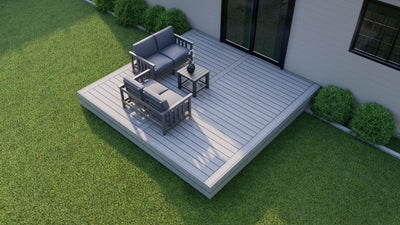


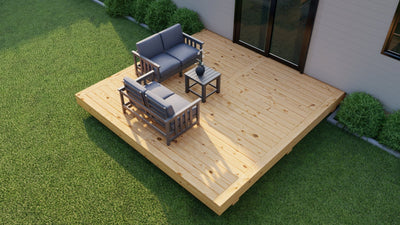


Is A Modular Decking System Worth It? 7 Reasons That Prove It Is
Share
People dream about a backyard deck for years, and for good reasons. A backyard deck is a great place to hang out with friends, celebrate birthdays and anniversaries, and unwind. A new deck can completely change how you use your outdoor space.
However, traditional deck builds come with high costs, long wait times, and more complications than most people expect. For a lot of homeowners, that is the moment the idea gets pushed back another year.
If you don't want to delay your deck for another year, A-DIY's modular decking system is the answer. In this article, we will break down 5 reasons the A-DIY modular decking system is worth it if you want a deck without the usual delays and budget surprises.
What Is a Modular Decking System?
A modular decking system is a pre-engineered deck kit. The kits include precision-cut components that fit together seamlessly. Everything you need to build your deck arrives ready to assemble, with precision-cut deck boards, engineered substructure, deck blocks or footings, and all necessary hardware.
Unlike traditional decks that require weeks of work and contractor expertise, modular systems assemble in hours. At A-DIY, we've pioneered patent-pending DIY deck kit designs that eliminate cutting and measuring entirely. And you'll need about an hour of your time and a power drill.
Is A-DIY Modular Deck Kit Worth It?
1. Save Thousands in Labor Costs
The average contractor charges $35-55 per square foot for deck installation. For a 12×16 deck, that's $6,720 to $10,560 in labor alone, before material prices even enter the equation.
In comparison, a 12x16 traditional contract deck would cost around $12,000, while the same size modular deck would cost around $6,500.
Traditional Contractor Deck (12×16)
- Materials: $4,000
- Labor: $7,500
- Permits/Fees: $500
- Total: $12,000
Modular DIY System
- Complete Kit: $5,500
- Labor: $0
- Permits: $0 (ground-level)
- Total: $5,500
- Your Savings: $6,500
For that $6,500, you could furnish your entire wood deck, add a pergola or railing, or fund your next home improvement project. A-DIY kits deliver up to 40% cost savings because you're getting Grade 1 kiln-dried pressure-treated lumber at factory-direct pricing.
One of our customers, Lori, purchased a 12x12 composite deck kit and said, "I saved over $5,000 in contractor fees, as the kit came with everything I needed, and I couldn't be more proud of what I accomplished."
2. Assemble Your Deck in Hours
Traditional deck contractors quote 2-6 weeks to build a deck. But with modular design, most homeowners finish in under an hour.
The timeline difference is staggering!
- Traditional decks require 2-3 weeks of site prep, framing, decking installation, and finishing
- A modular system can be built on the same day once you get the delivery.
People ask us how portable deck installation can be so fast. It's because A-DIY ready to assemble decking solutions do not require cutting or measuring, and pre-engineered deck panels fit precisely.
"I'm not the handiest person, but A-DIY's assembly instructions were so clear that I had my deck up in under an hour," says Steve J. "My friends are amazed at how quickly I transformed my outdoor space."
3. Zero Special Skills or Tools Required to Build a Modular Deck
Building a traditional deck demands a full workshop and intermediate carpentry skills.
Here's what you'd normally need:
- Circular saw, or miter saw ($150-300)
- Drill and impact driver ($200)
- Level, square, measuring tape ($50)
- Post hole digger ($40)
- Concrete mixer rental ($75/day)
- Safety equipment ($50)
Total investment for tools is around $565.
With a modular prefabricated deck kit, you need only a power drill you probably already own. Total cost of new tools required is a perfect $0.
The skill difference matters even more than the tool difference. Traditional deck building requires reading blueprints, precise measuring and marking, straight cutting, level installation, post placement, and load calculations. And for modular assembly, you only need to turn a drill and follow picture instructions. That's the complete skill set.
4. Professional-Grade Quality at DIY Prices
Professional-grade means engineered precision. It means components manufactured to exact specifications, not hand-cut on-site. It means premium materials.
A-DIY uses Grade 1 KDAT (Kiln-Dried After Treatment) lumber instead of store-grade boards. KDAT prevents the warping, shrinking, and cracking that plagues standard pressure-treated wood.
Load-tested strength supports hot tubs, furniture, and gatherings. "Being in the construction business, I appreciate a well-engineered product," says Matthew R., a construction professional.
With our DIY deck kits, you get the same structural integrity a contractor would build, with precision factory manufacturing that ensures every joint is perfect and every connection is solid and stable.
5. Expand and Customize the Deck Surface as You Go
Traditional decks lock you in. Build it once, and that's what you get. And if you want to expand later, the permits, contractors, and materials may no longer match.
You can expand modular systems according to your budget and needs. Buy what fits your budget today, add modules tomorrow, next year, or whenever you're ready.
Because modules connect seamlessly, you can build multi-level terraces, add sections for hot tubs or grills, reconfigure layouts entirely, or even relocate if you move.
A-DIY's modular construction makes expansion effortless. Our kits connect seamlessly, and we maintain consistent product lines. Your deck from today will match perfectly with additions you make years from now.
Is a Modular Decking Solution Right for You?
Modular decking systems work beautifully for first-time deck builders, budget-conscious homeowners, time-limited busy professionals, DIY enthusiasts of all skill levels, anyone avoiding contractor hassles, homeowners wanting expandable options, and those seeking quality without premium prices.
Traditional building is the right choice if you want 100% custom shapes with curves or complex angles, you're building elevated decks over 30 inches, your lot has an extreme slope requiring any deck foundation preparation, or local codes specifically require contractor installation.
For the 90% of homeowners who want a beautiful, functional deck without complexity, an easy to assemble modular system is the smarter choice.
Not sure if modular decking fits your project? A-DIY's design specialists offer free consultations. Send photos of your space to get expert recommendations.
Your Backyard Is Waiting
Modular decking systems represent a fundamental shift in how homeowners create outdoor living spaces. From saving thousands in labor costs to assembling your deck the same day you receive it, these systems deliver everything traditional deck building promises.
Explore A-DIY's professional-grade deck kits and join the 50,000+ homeowners who've discovered the difference.
Frequently Asked Questions
How much does a modular deck system cost?
A modular deck system costs $5,000-$8,000 for a 12×16 deck, which is 40-50% less than hiring a contractor for the same project. Traditional contractor installations cost $12,000-$15,000 including labor, while modular kits eliminate labor costs entirely. A-DIY's professional-grade kits start at $5,500 with everything included and free shipping.
Do I need a permit for a modular deck?
Permit requirements vary by location, but many ground-level modular decks under 30 inches high and under 200 square feet don't require permits. We recommend you check your local building department for specific regulations.
Are modular deck systems as strong as traditional decks?
Yes, professional-grade modular systems are engineered to meet or exceed the same load requirements as traditional decks. A-DIY decks use Grade 1 KDAT (Kiln-Dried After Treatment) lumber and 6×6 beams that support hot tubs, furniture, and large gatherings.
Can you expand a modular deck later?
Yes, modular decks are designed for expandability. You can add sections anytime without contractor involvement or complex construction. A-DIY's modular design connects seamlessly and allows you to start with a smaller deck and add modules as your budget allows.