






18 Deck Design Ideas That Transform Your Backyard
Share
There's a moment every homeowner knows. You step outside on a warm and inviting evening, look at your barren backyard, and think. I wish we had a deck right here.
We've rounded up 18 of the most popular deck design ideas trending in 2026, drawn from homeowner projects, professional deck builders, and our own experience, to help thousands of Americans build their dream decks with A-DIY's pre-engineered deck kits.
Why Deck Design Matters More Than You Think
Most homeowners think about deck design purely in terms of aesthetics. What color boards, what style of deck railing? But design is the first decision that determines every other decision. Your layout determines how many people you can entertain. Your material determines how much you'll spend on maintenance over the next decade. Your configuration determines whether your deck feels like a bolt-on afterthought or a natural extension of your home.
According to Remodeling Magazine's Cost vs. Value report, a well-built composite deck can return over 50% of its cost at resale. But beyond the numbers, there's the quality-of-life argument, which is harder to put a figure on and probably more important anyway.
First, Choose Your Deck Materials
Before you fall in love with a specific deck style, you need to get practical about materials. Nothing impacts the long-term look, cost, and maintenance of your deck more than what it's built from.
|
Material |
Maintenance |
Lifespan |
Best For |
|---|---|---|---|
|
Pressure-Treated Lumber |
Annual staining |
15–25 yrs |
Classic look, budget builds |
|
Composite Decking |
Minimal with soap & water |
25–35 yrs |
Low maintenance, families |
|
Hardwood (Ipe, Cumaru) |
Periodic oiling |
30–50 yrs |
Luxury aesthetics |
|
PVC / Cellular PVC |
Very low |
25–30 yrs |
Wet climates, waterfront |
If you want our honest recommendation? For most homeowners, composite decking is the sweet spot. And that is also true if you have kids, pets, or simply don't want to spend weekends staining and sealing. A-DIY's composite deck kits come with a 25-year warranty and resist fading, splintering, and moisture, which makes them an investment that pays for itself over time.
That said, pressure-treated wood remains a fantastic, affordable deck kit option if you love the natural wood look and don't mind a bit of seasonal upkeep.
Let's get into the variety of deck design ideas.
Ground-Level & Platform Deck Ideas
Platform decks are close to the ground and have a minimal elevation. Ground level decks are the most accessible starting point for DIYers. They require no ledger attachment, often no permit, and can be built in a single weekend. Here are some ways to make them genuinely beautiful.
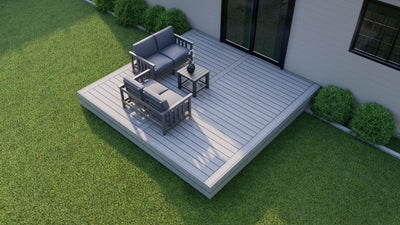
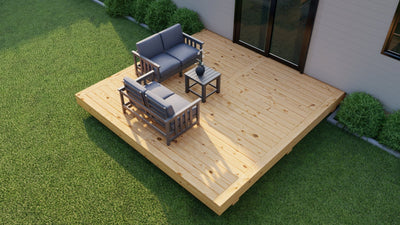
1. The Floating Platform Deck
A floating deck sits on surface-level footings without attaching to your house. It's the most straightforward DIY build and with modular kits, you can assemble it in hours. Position it near a garden bed, under a mature tree, or at the edge of a lawn to create a destination in the yard rather than just a transition from door to grass. Add an outdoor rug, a few weather-resistant chairs, and you've got a genuine outdoor room.
2. Wraparound Ground-Level Deck
If your home's back door and side yard both deserve attention, a wraparound deck connects multiple entry points into one unified outdoor living space. This works beautifully with ranch-style homes or split-level properties. The key design consideration here is to keep the board's direction consistent around the corner. Diagonal boards work particularly well for this.
3. Deck Around a Tree
Got a beautiful shade tree you don't want to lose? Build around it. A cutout in your deck boards (leaving adequate clearance for trunk growth) creates a natural focal point and gives you built-in shade. This is a timeless design choice that looks genuinely thoughtful, not to mention it keeps the tree healthy and your yard's microclimate cooler.
Multi-Level Deck Design Ideas
A multi-level deck is essentially multiple decks at different elevations connected by stairs or landings. They're ideal for sloped yards, larger families, and anyone who wants to create distinct "zones" in their outdoor oasis.
4. Two-Tier Entertainment Deck
Keep the grill and dining table on the upper level, closest to the kitchen door, then drop down to the lower level for the fire pit and deep-seating lounge space. The visual separation creates an almost indoor-room-like sense of flow. Using a consistent composite board color across both tiers ties the design together beautifully and creates an entertaining and relaxing feel.
5. Multi-Level Deck on a Sloped Yard
Sloped yards used to be the nemesis of deck builders. Not anymore. A stacked multi-level design actually makes the most of a slope. Each level becomes a natural terrace, with steps acting as design features rather than workarounds. The key is the adjustable post height to maintain a level surface at each tier. A-DIY's deck kits are engineered specifically for uneven terrain and include longer post kits for elevated sections.
6. Connected Deck + Patio
Bridge the gap between your house and a concrete patio below by adding a deck as an intermediate level. This creates a natural indoor-outdoor flow through the home, and the visual layering of wood deck boards over stone patio adds texture and depth to the overall yard design.
Not sure which deck size or design fits your yard?
A-DIY's senior design consultants will review your yard photos and measurements completely free. Contact us today and we will help you map out the perfect deck before you spend a dollar.
Covered Deck & Pergola Design Ideas
One of the biggest mistakes homeowners make is building a beautiful deck without thinking about shade and weather. In most parts of the U.S., an uncovered deck is only comfortable for about half the year. Add some cover, and you double, sometimes triple, the time you actually spend outdoors.
7. Classic Cedar Pergola Over Composite Deck
The pairing of warm cedar overhead beams with low-maintenance composite deck boards is a winning combination. The pergola softens the look, provides dappled shade, and offers a structure for hanging string lights, trailing plants, or even a ceiling fan. Cedar is naturally rot-resistant and doesn't require painting other than just an annual coat of sealant to keep it looking sharp.
8. Louvered Pergola for Year-Round Use
Motorized louvered pergolas are one of the fastest-growing trends in outdoor living. Adjustable aluminum slats let you control sunlight and airflow with a remote or smartphone app, and many systems are rated for rain. Paired with an outdoor heater and a fire table, a louvered pergola makes your deck genuinely four-season usable.
9. Privacy Pergola with Lattice Walls
In densely built neighborhoods, a pergola with lattice side panels provides overhead shade and sidewall privacy from neighboring homes. This turns your deck into an intimate outdoor retreat. Train climbing plants like jasmine, wisteria, or hops along the lattice will give you a lush green enclosure within a season or two.
Outdoor Kitchen and Dining Area Deck Ideas
10. The Full Outdoor Kitchen Deck
An outdoor kitchen on your deck with a built-in grill, countertop workspace, a small fridge, and a bar area is the ultimate hosting setup. From a deck plan standpoint, position the kitchen zone nearest the house for easy access, then orient seating outward so guests can interact with the cook. Composite decking kits hold up beautifully in the kitchen. Just ensure your grill is on a fire-safe mat or stone pad.
11. Fire Pit Deck Zone
A dedicated fire pit zone with a built-in gas fire table or a freestanding wood-burning pit on a stone or metal ember mat instantly makes a deck feel like a destination. Design the surrounding seating in a circle or U-shape at conversation distance (roughly 5–7 feet from the flame), and make sure any overhead pergola clears the fire by at least 10 feet. Composite decking near fire features should always be protected by a proper non-combustible mat.
12. Built-In Bench Seating Around the Perimeter
Built-in benches create a defined seating area without cluttering the deck with outdoor furniture, and the plenty of space beneath can be used for storage. Design them along two or three sides of the deck area for a clean, symmetrical look, with the open side facing the yard. Add outdoor cushions in weather-resistant fabric and you've created a cozy, finished look that packs away for winter.
Pro Tips for Deck Zoning
- Allow at least 7 feet of clearance for dining zones.
- Keep the grill at least 3 feet from any railing or wall and never under a pergola roof.
- Use a consistent decking board direction throughout. Change direction only to define a separate zone.
- Arrange lighting zoning like overhead for ambient, step lights for safety, and accent for drama.
- If combining a modern fire pit and outdoor dining area, use different material textures or levels to visually separate them.
Small Deck Design Ideas for Outdoor Space
Small backyards and urban lots are a modern design challenge that, when solved well, creates some of the most charming outdoor areas imaginable.
13. The Compact Floating Deck
You don't need 400 square feet to have a great deck. A 10×10 or 12×12 floating platform near your back door is enough to fit a coffee table for two, a pair of chairs, and a small planter. And it instantly transforms a bare yard into a usable outdoor space. This is the entry-level deck project with outsized impact, and it's exactly what A-DIY's smallest deck kits are designed for.
14. Vertical Garden Wall on a Small Deck
When floor space is precious, go vertical. A simple trellis or mounted planter system along one fence wall turns a plain boundary into a living green backdrop that makes the whole deck feel larger and more lush. Add herbs like rosemary, thyme, and basil, and your deck serves double duty as a kitchen garden.
15. The Extended Doorstep Deck
If you have a single door leading to a small backyard, a narrow, extended backyard deck (4 to 6 feet deep, the full width of the house) creates a seamless transition and provides a functional surface for morning coffee, shoe-off zones, and overflow outdoor entertaining. These long, shallow decks work brilliantly with townhouses, row homes, and apartments with private patios.
Deck Lighting Ideas That Transform Your Outdoor Space at Night
Lighting is the most underrated element of modern deck design. A well-lit deck at 9 pm can feel more magical than the same deck space at noon.
16. String Lights + Post Cap Lights
Overhead string lights strung from post to post (or from the house to a pergola beam) seamlessly create instant warmth and ambiance. Pair them with subtle post-cap lights on your railing posts for a polished, finished look. Choose warm white (2700K–3000K) bulbs. Cool white feels cold and clinical outdoors.
17. LED Step Lights
Recessed LED lights installed in stair risers serve a practical safety function while also creating a beautiful glowing effect at night. They're one of the most cost-effective ways to dramatically upgrade the look of a deck after dark. And solar-powered options make them virtually maintenance-free.
18. Under-Rail Lighting
Strip LED lights mounted underneath the bottom rail or the deck's perimeter fascia board cast a subtle glow downward onto the deck boards and out toward the yard. The effect is contemporary and slightly dramatic, and it works especially well on elevated decks where the light pools down the steps.
Frequently Asked Questions About Deck Design
Composite vs. pressure-treated wood: which should I choose?
If you want the lowest upfront cost and classic wood aesthetics, pressure-treated deck kits are the answer. If you want minimal long-term maintenance, better durability in wet climates, and a 25-year warranty, composite deck kits win. The total lifetime cost of a composite is often lower than that of real wood once you factor in annual staining and sealing.
How do I figure out the right deck size for my yard?
Start with the function. How many people do you typically entertain? A 10×12 deck fits a bistro table for two and a couple of chairs comfortably. A 16×20 deck can accommodate a full outdoor dining set plus lounge seating. Measure your door clearance, property lines, and any existing landscaping you want to preserve. If you're unsure, A-DIY's free design consultation will help you map out the ideal size.
How much does a deck cost to build a deck?
A professionally contracted deck ranges from $15 to $35+ per square foot. A 12×16 deck built by a contractor typically runs $8,000–$18,000. A-DIY's pre-engineered kits bring that cost down by 40–50% as you only pay for the materials and your own labor, not the contractor's markup and scheduling delays.
What are the most popular decks right now?
Multi-zone decks and ground-level platform decks are the two most popular designs. Multi-zone decks appeal because they allow one surface to serve multiple functions. Ground-level platforms are popular for their clean, simple aesthetic and their relative ease of permitting and construction.
The Bottom Line
The best deck design is the one that fits your life, not someone else's Pinterest board.
Whether you're drawn to a simple ground-level platform, a multi-zone entertainment deck, or a composite showpiece, the ideas above are a starting point. Take what resonates, adapt it to your space, and build something you're genuinely proud of.
If you want a faster way to build a beautiful deck, A-DIY's DIY deck kits are worth a look. A-DIY's pre-engineered modular deck kits arrive pre-cut and ready to assemble with just a power drill. Up to 50% cheaper than a contractor. Ships nationwide in 7–14 days.